Cyber Investigation

Explore cyber investigation methods. Learn about digital evidence, cyber-attacks, online fraud, data breaches, logs, devices, and threat behaviour. Strengthen prevention, evidence handling, legal awareness, and response planning today.

BEHAVE Model

BEHAVE Investigative Framework (Alan Elangovan)

The BEHAVE Investigative Framework by Alan Elangovan helps investigators connect behaviour, evidence, motive, timeline, vulnerability, risk, and findings. It supports fair, structured, evidence-based investigations by reducing bias, improving risk assessment, strengthening report writing, and helping investigators reach clear, defensible conclusions across criminal, workplace, school, healthcare, and security cases.
Case Theory Model

Case Theory Model (Legal Practice Influence)

The Case Theory Model, influenced by Legal Practice, involves constructing a coherent narrative explaining how and why an event occurred. It guides investigators in organising evidence, testing hypotheses, and aligning facts with legal elements, ensuring cases are logically structured, persuasive, and capable of withstanding legal scrutiny.

Investigative Cycle Model

Investigative Cycle Model (General Investigative Practice)

The Investigative Cycle Model, grounded in Investigative Practice, outlines a structured process from information gathering to analysis, action, and review. It helps investigators manage cases systematically, ensure evidence-based decisions, and continuously refine strategies, supporting effective, accountable, and adaptable investigations across diverse operational contexts.

Forensic Intelligence Model

Forensic Intelligence Model (Pierre Margot)

The Pierre Margot Forensic Intelligence Model integrates forensic science with intelligence analysis to support proactive investigations. It uses trace evidence, patterns, and data interpretation to identify links between crimes, support decision-making, and enhance crime prevention, moving beyond traditional reactive forensic approaches toward strategic investigative intelligence.

Undercover Operations Model

Undercover Operations Model (Law Enforcement Practice)

The Undercover Operations Model, based on Law Enforcement practice, involves covert infiltration to gather evidence and intelligence. It focuses on identity creation, role immersion, and controlled engagement with suspects, enabling investigators to uncover hidden activities, disrupt criminal networks, and support prosecutions while maintaining operational security and legal compliance.

SIGINT Analysis Model

SIGINT Analysis Model (National Security Agency Influence)

The SIGINT Analysis Model, influenced by the National Security Agency, focuses on collecting and analysing electronic communications and signal data. It supports investigators in intercepting, decoding, and interpreting transmissions, enabling intelligence gathering, threat detection, and strategic decision-making in cyber, military, and national security investigations.

OSINT Investigation Model

OSINT Investigation Model (Michael Bazzell Influence)

The OSINT Investigation Model, influenced by Michael Bazzell, focuses on collecting and analysing publicly available information from digital and open sources. It supports investigators in identifying leads, verifying identities, tracking activities, and gathering intelligence ethically, enhancing investigative efficiency in cyber, financial, and criminal investigations.

MITRE Corporation

MITRE ATT&CK Framework (MITRE Corporation)

The MITRE Corporation ATT&CK Framework is a comprehensive knowledge base of adversary tactics, techniques, and procedures. It enables investigators to analyse cyber threats, map attacker behaviour, strengthen detection, and improve incident response, supporting intelligence-driven cybersecurity investigations and defence strategies across complex digital environments.

Cyber Kill Chain Model

Cyber Kill Chain Model (Lockheed Martin)

The Lockheed Martin Cyber Kill Chain Model outlines stages of a cyberattack, from reconnaissance to actions on objectives. It enables investigators to detect, analyse, and disrupt threats at each phase, strengthening cybersecurity, incident response, and forensic investigations through structured understanding of attacker behaviour and intrusion processes.

Beneficial Ownership Analysis Model

Beneficial Ownership Analysis Model (FATF Influence)

The Beneficial Ownership Analysis Model, guided by Financial Action Task Force standards, identifies the true individuals controlling assets or entities behind complex structures. It supports investigations into money laundering, corruption, and tax evasion by uncovering hidden ownership, enhancing transparency, and enabling effective enforcement and asset recovery actions.

Asset Tracing Model

Asset Tracing Model (Financial Investigation Practice)

The Asset Tracing Model, influenced by Financial Investigation practices, focuses on identifying, tracking, and recovering assets linked to criminal activity. It analyses financial trails, ownership structures, and transactions, enabling investigators to uncover hidden wealth, support prosecution, and facilitate asset recovery in fraud, corruption, and money laundering cases.

Financial Profiling Model

Financial Profiling Model (Forensic Accounting Practice Influence)

The Financial Profiling Model, influenced by Forensic Accounting practices, analyses financial behaviours, transaction patterns, and asset movements to detect irregularities. It supports investigators in identifying fraud, money laundering, and illicit enrichment, enabling evidence-based tracing of funds, financial reconstruction, and strategic decision-making in complex financial investigations.

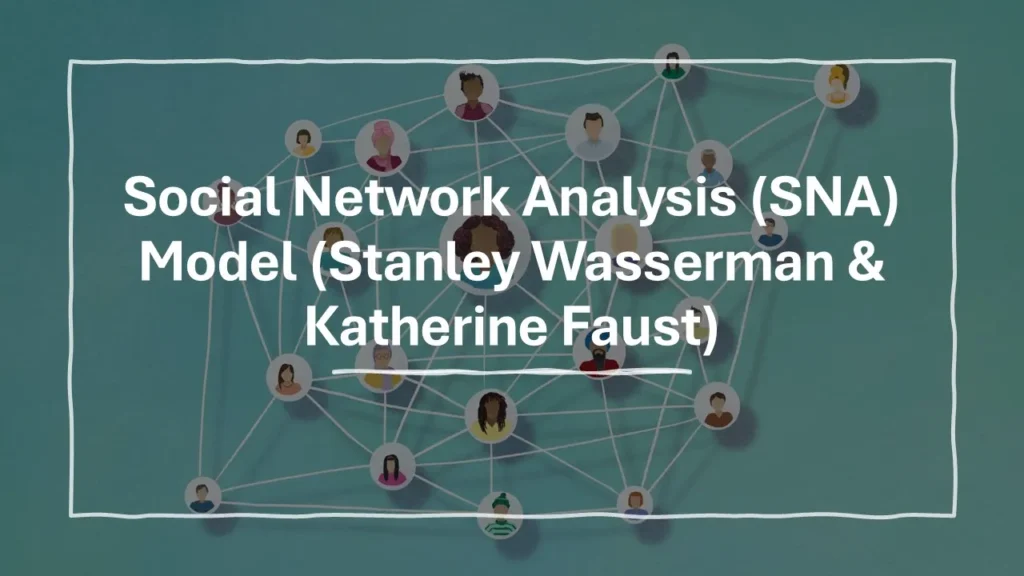
Social Network Analysis (SNA) Model

Social Network Analysis (SNA) Model (Stanley Wasserman & Katherine Faust)

The Stanley Wasserman and Katherine Faust Social Network Analysis Model examines relationships, structures, and interactions within networks. It helps investigators map connections, identify influential actors, detect hidden groups, and analyse information flow, supporting intelligence-led investigations, disruption of criminal networks, and strategic decision-making in complex investigative environments.

Network Analysis Model

Network Analysis Model (Harrison C. White Influence)

The Harrison C. White Network Analysis Model examines relationships and interactions within criminal networks. It identifies key actors, communication patterns, and influence structures, enabling investigators to disrupt organized crime, uncover hidden connections, and target critical nodes, enhancing intelligence-led operations and strategic decision-making in complex investigative environments.

Hypothesis Testing Model

Hypothesis Testing Model (Karl Popper)

The Hypothesis Testing Model developed by Karl Popper emphasizes forming testable hypotheses and attempting to falsify them through evidence, enabling objective analysis, critical thinking, and systematic validation of conclusions in investigative and scientific inquiry.

5W1H Analysis Model

5W1H Analysis Model (Rudyard Kipling Influence)

The 5W1H Analysis Model influenced by Rudyard Kipling uses six key questions—Who, What, When, Where, Why, and How—to systematically gather information, structure analysis, and ensure comprehensive understanding in investigations, problem-solving, and decision-making processes.

Evidence Lifecycle Model

Evidence Lifecycle Model (Forensic Science Practice)

The Evidence Lifecycle Model influenced by forensic science practice outlines the stages of evidence from identification and collection to analysis, storage, presentation, and disposal, ensuring integrity, traceability, and compliance throughout the investigative and judicial process.

Chain of Custody Model

Chain of Custody Model (Legal Practice Standard)

The Chain of Custody Model influenced by legal practice standards documents the chronological handling, transfer, and storage of evidence, ensuring integrity, authenticity, and accountability, thereby maintaining admissibility in court and preventing contamination, tampering, or loss throughout the investigative process.

DFRWS Investigation Model

DFRWS Investigation Model (Digital Forensic Research Workshop)

The DFRWS Investigation Model developed by the Digital Forensic Research Workshop outlines a systematic approach to digital investigations, including identification, preservation, collection, examination, analysis, and presentation, ensuring methodological rigor, evidence integrity, and defensible forensic conclusions.

NIST Digital Forensics Framework

NIST Digital Forensics Framework (NIST, USA)

The NIST Digital Forensics Framework developed by the National Institute of Standards and Technology provides a structured process for collection, examination, analysis, and reporting of digital evidence, ensuring consistency, reliability, and legal defensibility in forensic investigations.

ACPO Digital Evidence Model

ACPO Digital Evidence Model (ACPO, UK)

The ACPO Digital Evidence Model developed by the Association of Chief Police Officers establishes principles for handling digital evidence, emphasizing preservation, integrity, audit trails, and lawful access to ensure admissibility and reliability in forensic investigations.

Digital Forensic Investigation Model

Digital Forensic Investigation Model (Eoghan Casey)

The Digital Forensic Investigation Model developed by Eoghan Casey provides a structured approach to identifying, preserving, analyzing, and presenting digital evidence, ensuring integrity, reproducibility, and legal admissibility in investigations involving electronic devices and cyber-related activities.

Timeline Analysis Model

Timeline Analysis Model (Forensic Investigation Practice Influence)

The Timeline Analysis Model influenced by forensic investigation practices organizes events chronologically to reconstruct incidents, identify gaps, detect inconsistencies, and establish sequences of actions, enabling investigators to understand case progression, corroborate evidence, and support accurate investigative conclusions.

Link Analysis Model training slide on Anacapa Sciences and IBM i2 influence for intelligence analysis training.

Link Analysis Model (Anacapa Sciences / IBM i2 Influence)

The Link Analysis Model influenced by Anacapa Sciences and IBM i2 visualizes relationships between people, events, and entities, enabling investigators to identify networks, patterns, and hidden connections, supporting intelligence-led investigations and strategic decision-making.

Shopping Cart
Scroll to Top