



Public Legal Awareness Centre
🇸🇬 Public Learning Public Legal Awareness Twenty detailed, interactive lessons for adults and members of the public. Learn how Singapore
Primary 1
Primary 1 CCE — Rules, Fairness and Personal Safety Skip to lesson LPS Academy 🇸🇬 Primary 1 • Age 6–7
Secondary 4 Express
Secondary 4 Express CCE — Applied Legal Citizenship, Crime Awareness and Readiness for Adulthood Skip to lesson LPS Academy 🇸🇬
Secondary 4 Normal
Secondary 4 CCE — Crime, Evidence, Accountability and Rehabilitation Skip to lesson LPS Academy 🇸🇬 Secondary 4 Normal • Age
Secondary 3
Secondary 3 CCE — Radicalisation, Terrorism and Protection of Social Harmony Skip to lesson LPS Academy 🇸🇬 Secondary 3 •
Secondary 2
Secondary 2 CCE — Gangsterism, Violence and Organised Harmful Behaviour Skip to lesson LPS Academy 🇸🇬 Secondary 2 • Age
Secondary 1
Secondary 1 CCE — Personal Boundaries, Consent and Adolescent Responsibility Skip to lesson LPS Academy 🇸🇬 Secondary 1 • Age
Primary 6
Primary 6 CCE — Peer Pressure, Group Influence and Serious Misconduct Skip to lesson LPS Academy 🇸🇬 Primary 6 •
Primary 5
Primary 5 CCE — Digital Citizenship and Resistance to Harmful Influence Skip to lesson LPS Academy 🇸🇬 Primary 5 •
Primary 4
Primary 4 CCE — Community Safety and Early Crime Prevention Skip to lesson LPS Academy 🇸🇬 Primary 4 • Age
Primary 3
Primary 3 CCE — Harmful Behaviour and Personal Responsibility Skip to lesson LPS Academy 🇸🇬 Primary 3 • Age 8–9
Primary 2
Primary 2 CCE — Respect for People, Property and Public Spaces Skip to lesson LPS Academy 🇸🇬 Primary 2 •
Secondary 5 Normal
Secondary 5 CCE — Applied Legal Citizenship and Readiness for Adulthood Skip to lesson LPS Academy 🇸🇬 Secondary 5 Normal
Banking Sector Offences
This checklist helps trainers, compliance teams and investigators verify bank-sector offences against Singapore laws, MAS requirements and official guidance before training, publication or operational use. It supports review of criminal, regulatory, AML/CFT, sanctions, cyber, data protection, advisory, governance and workplace obligations, while reminding users to verify penalties and enforcement powers.
Banking Sector Offences – Test V1
This checklist helps trainers, compliance teams and investigators verify bank-sector offences against Singapore laws, MAS requirements and official guidance before training, publication or operational use. It supports review of criminal, regulatory, AML/CFT, sanctions, cyber, data protection, advisory, governance and workplace obligations, while reminding users to verify penalties and enforcement powers.

Personal Space and Proxemics in Business Interactions
This chapter examines the role of personal space in workplace communication. It explains proxemics and how distance, positioning, and spatial awareness influence comfort, trust, and interaction effectiveness, helping professionals manage communication more appropriately in different business contexts.
Hand Gestures and Their Hidden Meanings
This chapter explores how hand gestures contribute to communication and influence perception. It explains the meanings behind different gestures, how they support verbal messages, and how controlled gestures enhance clarity, engagement, and professionalism in business interactions.
Posture and Presence in Professional Settings
This chapter explains how posture influences professional presence and perception. It highlights how body alignment, movement, and physical control communicate confidence, authority, and engagement, helping individuals project a strong and credible image in workplace interactions.

Eye Contact, Power, Trust, and Control
This chapter examines the role of eye contact in establishing trust, authority, and connection in professional communication. It highlights how eye contact influences perception, controls interaction, and enhances credibility, while also explaining how to adapt eye contact effectively in different situations.
Facial Expressions and Emotional Leakage
This chapter focuses on facial expressions as key indicators of emotion in communication. It explains how emotions can unintentionally appear through facial cues, known as emotional leakage, and how recognising these signals improves understanding, communication accuracy, and interaction effectiveness.
The Role of Perception in Workplace Communication
This chapter explores how perception influences communication in the workplace. It explains how individuals interpret behaviour based on experiences, biases, and context, and how understanding perception can reduce misunderstandings, improve clarity, and enhance professional relationships.

Screen Time and Attention Span in Children
This article examines the relationship between excessive screen time and reduced attention span in children. It discusses behavioural effects, emotional consequences, concentration difficulties, and strategies for promoting healthier digital habits and cognitive development.
Verbal vs Non-Verbal Communication Dynamics
This chapter explains the relationship between verbal and non-verbal communication in professional settings. It highlights how tone, gestures, and body language interact with spoken words to influence meaning, clarity, and perception, ensuring more effective and aligned workplace communication.
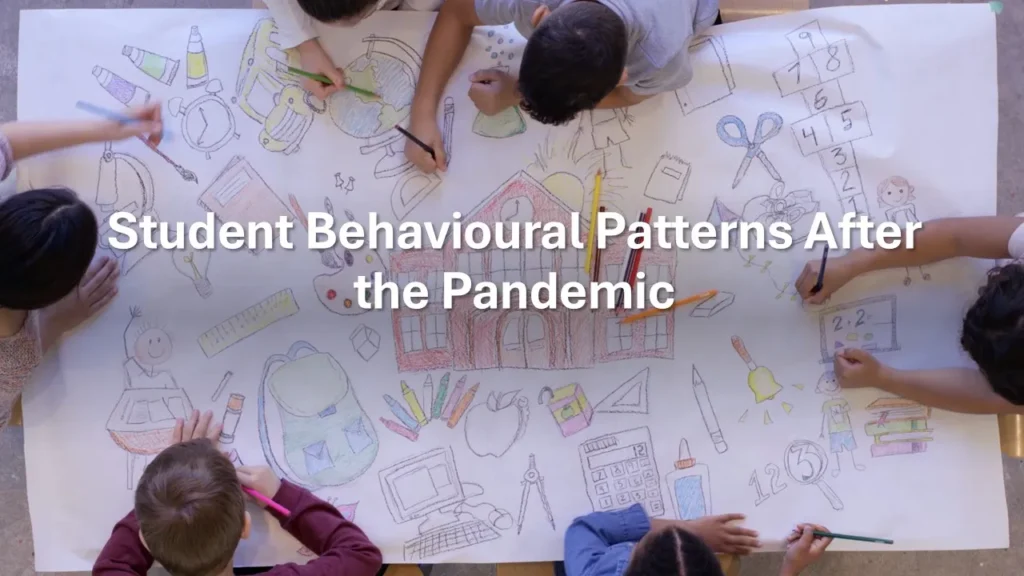
Student Behavioural Patterns After the Pandemic
This article explores how the global pandemic affected student behaviour, emotional wellbeing, social interaction, learning habits, and classroom engagement. It examines behavioural shifts, emotional challenges, and educational adjustments in post-pandemic learning environments.
Positive Behaviour Intervention Strategies in Education
This article discusses positive behaviour intervention strategies used to improve classroom behaviour, emotional regulation, student engagement, and discipline. It explores proactive educational approaches that encourage healthy behavioural development and supportive learning environments.

First Impressions – The Science of Instant Judgement
This chapter examines how first impressions are formed within seconds through body language and behavioural cues. It highlights the role of appearance, posture, and facial expressions in shaping perception and explains how professionals can manage their presence to create positive and lasting impressions.

Anxiety and Stress Management Among School Students
This article examines the causes of anxiety and stress among school students and their effects on emotional wellbeing, behaviour, concentration, and academic performance. It highlights coping strategies, emotional support systems, and resilience-building approaches.
The Future of Banking Security and Crime Prevention
The Future of Banking Security and Crime Prevention helps banking leaders, trainers, security officers, cybersecurity teams and frontline staff prepare for evolving threats. It explains AI, biometrics, predictive analytics, cyber risk, integrated protection, customer safeguarding, ethical governance and continuous improvement strategies that strengthen future-ready banking security, crime prevention and institutional resilience.
The Psychology Behind Non-Verbal Communication in the Workplace
This chapter explores the psychological foundations of non-verbal communication, focusing on how emotions, cognition, and perception influence behaviour. It explains why individuals react to body language and how psychological processes shape workplace communication, decision-making, and interpersonal interactions.
Leadership and Decision-Making in Banking Security
Leadership and Decision-Making in Banking Security helps banking leaders, trainers, security managers and frontline supervisors strengthen judgement, communication, ethics and crisis leadership. It explains risk-based decisions, situational awareness, accountability, evidence assessment, team coordination, staff support and continuous improvement practices that protect customers, employees, assets and institutional resilience during security threats.
Behavioural Effects of Online Learning on Students
This article explores how online learning environments influence student behaviour, attention span, emotional wellbeing, motivation, communication, and social interaction. It discusses both positive and negative behavioural impacts of digital education systems.
Risk Assessment and Vulnerability Management in Banking Security
Risk Assessment and Vulnerability Management in Banking Security helps banking leaders, trainers, security officers, risk teams and frontline staff understand threat identification, control weaknesses, vulnerability management, technology risk, human factors, incident response and ethical assessment. It explains practical strategies that strengthen bank protection, customer trust, operational resilience and financial crime prevention.
Introduction to Business Body Language and Behavioural Communication
This chapter introduces business body language and behavioural communication, explaining how non-verbal cues influence workplace interactions. It highlights the importance of understanding gestures, posture, tone, and behavioural patterns to enhance communication, build trust, and improve professional effectiveness in business environments.

The Role of Empathy in Teacher-Student Relationships
This article explains the role of empathy in teacher-student relationships, including trust, emotional safety, discipline, motivation, social-emotional learning, inclusive teaching, digital empathy, and student wellbeing. It helps educators, school leaders, parents, and training professionals build respectful learning environments where students feel understood, supported, accountable, and ready to learn together daily.
Security Systems and Technology in Banking Protection
Security Systems and Technology in Banking Protection helps banking leaders, trainers, security officers, cybersecurity teams and frontline staff understand layered protection. It explains surveillance, access control, alarms, cybersecurity, artificial intelligence, integration, evidence handling, ethical safeguards and human factors that strengthen bank resilience, protect customers and reduce physical and digital security risks.
Digital Discipline Challenges in Schools
This article examines the behavioural and disciplinary challenges schools face in the digital age. It explores smartphone misuse, online distraction, social media influence, classroom disruption, and strategies for promoting responsible digital behaviour among students.
Teacher Authority and Student Resistance in Modern Schools
This article explains teacher authority and student resistance in modern schools, including classroom discipline, student behaviour, digital influence, peer pressure, parent-school alignment, teacher wellbeing, respectful correction, and balanced professional authority. It helps educators, school leaders, parents, and training professionals build firm, fair, respectful, and effective classroom leadership today.
Investigation and Evidence Handling in Bank Crimes
Investigation and Evidence Handling in Bank Crimes helps banking leaders, trainers, investigators, compliance teams and security officers manage evidence professionally. It explains scene control, physical evidence, digital records, chain of custody, interviews, event reconstruction, ethical assessment and reporting practices that protect fairness, accountability, customer trust and organisational resilience after bank crimes.
Rebuilding Classroom Respect After the Pandemic Learning Gap
This article explains rebuilding classroom respect after the pandemic learning gap, including routines, teacher authority, student behaviour, attendance, emotional regulation, peer relationships, learning recovery, and respectful classroom culture. It helps educators, school leaders, parents, and training professionals restore disciplined, supportive, and human-centred classrooms after major educational disruption today.
Cyberbullying and Its Impact on Student Behaviour
This article explores how cyberbullying affects student behaviour, emotional wellbeing, academic performance, confidence, and social interaction. It examines psychological consequences, warning signs, digital risks, and prevention strategies within modern educational environments.
Response and Crisis Management During Bank Robbery
Response and Crisis Management During Bank Robbery helps banking leaders, trainers, security officers and frontline staff manage robbery incidents safely. It explains calm compliance, customer control, communication, silent alarms, armed threats, scene preservation, trauma support, ethical assessment and crisis planning that protect lives, support investigation and strengthen organisational resilience.

Emotional Intelligence as a Foundation for Positive Classroom Relationships
This article explains emotional intelligence as a foundation for positive classroom relationships, including self-awareness, empathy, self-management, teacher-student trust, peer respect, conflict resolution, digital behaviour, and emotional safety. It helps educators, school leaders, parents, and training professionals build respectful, supportive, and emotionally intelligent classrooms that strengthen learning and wellbeing today together.
Emotional Intelligence Development in Modern Students
This article discusses the importance of emotional intelligence in modern education and student development. It explores how emotional awareness, empathy, communication, and emotional regulation influence behaviour, academic performance, relationships, and personal growth among students.
Detection of Suspicious Behaviour in Banking Environments
Detection of Suspicious Behaviour in Banking Environments helps banking leaders, trainers, security officers and frontline employees recognise behaviour-based warning signs without profiling. It explains pre-incident indicators, transaction concerns, group coordination, digital anomalies, evidence assessment, ethical safeguards and practical reporting strategies that protect customers, staff, assets and institutional trust.
Peer Relationships in Blended Learning Environments
This article explains peer relationships in blended learning environments, including collaboration, digital communication, inclusion, peer conflict, social belonging, student wellbeing, and digital responsibility. It helps educators, school leaders, parents, and training professionals strengthen healthy peer interaction across classroom and online learning spaces while reducing exclusion, distraction, and unequal participation risks.
Social Media Addiction and Adolescent Behavioural Changes
This article examines how excessive social media usage affects adolescent behaviour, emotional wellbeing, self-esteem, communication skills, and social interaction. It highlights behavioural risks associated with digital dependency, online validation, and psychological influence among teenagers.

How Bank Robbers Plan and Spy
How Bank Robbers Plan and Spy helps banking leaders, trainers, security officers and frontline staff understand pre-attack observation, routine exploitation, deceptive behaviour and suspicious enquiries. It explains warning signs, evidence assessment, ethical concerns, staff training and prevention strategies that reduce robbery opportunity while protecting customers, employees and institutional resilience.
Student Behavioural Trends in Online Classrooms
This article explains student behavioural trends in online classrooms, including attention, participation, camera use, digital etiquette, academic honesty, motivation, online fatigue, and teacher presence. It helps educators, school leaders, parents, and training professionals create active, responsible, inclusive, and human-centred digital learning environments that strengthen engagement and accountability today for students.
AI Influence on Student Behaviour and Classroom Attention
This article explores how artificial intelligence influences student behaviour, classroom attention, learning habits, emotional engagement, and digital dependency. It examines both the educational benefits and behavioural challenges AI technologies create within modern learning environments.

The Most Successful Bank Robberies in History
The Most Successful Bank Robberies in History helps banking leaders, trainers, investigators and security professionals learn from major historical heists without glorifying crime. It explains planning, deception, insider access, staff coercion, evidence, ethical assessment and prevention lessons that strengthen vault security, branch preparedness, governance, customer protection and institutional resilience.
CRW026 – B.E.H.A.V.E. Investigative Framework – Behavioural Intelligence for Modern Investigations
B.E.H.A.V.E. Investigative Framework – Behavioural Intelligence for Modern Investigations equips participants with advanced behavioural analysis techniques to identify patterns, assess intent, detect deception, evaluate risk indicators, and enhance investigative decision-making across criminal, workplace, intelligence, security, and educational investigation environments.

CRW025 – Facial Image Comparison Program (Impostor Detection)
Facial Image Comparison Program (Impostor Detection) equips participants with practical skills to analyse facial features, identify impostor indicators, compare travel or identity images, and support frontline security screening through behavioural observation, facial recognition principles, and investigative assessment techniques.
Digital Dependency and Student Social Interaction
This article explains digital dependency and student social interaction, including device reliance, digital distraction, peer communication, emotional wellbeing, classroom engagement, online conflict, and balanced digital habits. It helps educators, school leaders, parents, and training professionals support healthy student development while protecting human connection, attention, learning discipline, and social confidence today.

Online Bank Robbery
Online Bank Robbery helps banking leaders, trainers, cybersecurity teams and frontline staff understand cyber-enabled theft through phishing, card compromise, account takeover, social engineering, malware and system disruption. It explains warning signs, evidence assessment, ethical handling, customer protection and prevention strategies that strengthen digital banking security and reduce financial crime risk.
The Rise of AI Companionship and Its Impact on Student Relationships
This article explains the rise of AI companionship and its impact on student relationships, including emotional dependency, peer interaction, teacher-student trust, privacy, wellbeing, online safety, and responsible guidance. It helps educators, school leaders, parents, and training professionals protect students while supporting healthy human relationships in modern digital learning environments today.

Document Forgery at Banks
Document Forgery at Banks — Bank Fraud helps banking leaders, trainers, investigators and compliance teams understand forged identity documents, cheque manipulation, electronic fraud, false loans, invoice fraud and digital document alteration. It explains warning signs, evidence assessment, ethical handling, prevention controls and professional investigation practices that protect customers and institutions.

Foiling a Bank Robbery
Foiling a Bank Robbery helps banking leaders, trainers, security officers and frontline teams understand practical prevention strategies. It explains surveillance, security personnel, protective barriers, customer engagement, cash controls, environmental design, communication systems, evidence preservation, ethical assessment and staff training to deter robbery attempts while protecting life, dignity and institutional resilience.
How Hybrid Learning Is Changing Student Behaviour
This article explains how hybrid learning changes student behaviour, including attention, motivation, discipline, participation, digital responsibility, academic integrity, wellbeing, and accountability. It helps educators, school leaders, parents, and training professionals design balanced learning systems that combine classroom structure, online flexibility, teacher guidance, and responsible student habits in modern education effectively.
How to Play Safe in a Bank Robbery
How to Play Safe in a Bank Robbery helps banking leaders, trainers, frontline employees and customers understand safe behaviour during robbery incidents. It explains calm compliance, avoiding resistance, discreet observation, phone safety, hostage caution, ATM awareness, evidence preservation, ethical assessment and practical prevention strategies that protect lives, reduce harm and support investigation.

Teacher-Student Trust in the Age of AI Learning
This article explains teacher-student trust in the age of AI learning, including academic integrity, privacy, student behaviour, assessment, AI literacy, and institutional responsibility. It helps educators, school leaders, parents, and training professionals protect authentic learning relationships while using AI responsibly in modern classrooms, schools, colleges, and training institutions with confidence.
An In-Depth Consideration of Firsthand Experiences of Crime at Banks
Firsthand Experiences of Crime at Banks helps banking leaders, trainers, investigators and compliance teams learn from victim accounts, staff experiences and offender insights. It explains credit card fraud, robbery, social engineering, evidence assessment, ethical handling, customer support and practical prevention strategies that strengthen banking security and reduce future criminal opportunity.
BEHAVE Investigative Framework (Alan Elangovan)
The BEHAVE Investigative Framework by Alan Elangovan helps investigators connect behaviour, evidence, motive, timeline, vulnerability, risk, and findings. It supports fair, structured, evidence-based investigations by reducing bias, improving risk assessment, strengthening report writing, and helping investigators reach clear, defensible conclusions across criminal, workplace, school, healthcare, and security cases.

How to Identify a Typical Bank Robber
How to Identify a Typical Bank Robber helps banking leaders, trainers, security officers and frontline staff understand behaviour-based robbery warning signs without relying on stereotypes. It explains planning patterns, operational indicators, evidence assessment, ethical concerns, prevention strategies and safe response practices that protect customers, employees and bank assets during robbery risks.

Rapport-Based Interviewing Model (Clifford Stott Influence)
The Rapport-Based Interviewing Model, influenced by Clifford Stott, emphasises building trust, empathy, and communication to encourage cooperation. It supports investigators in reducing resistance, improving information quality, and fostering voluntary disclosure, making it highly effective in interviews, interrogations, and sensitive investigative contexts.

How Pre-Employment Background Check Affects Chances of Employment
How Pre-Employment Background Check Affects Chances of Employment explains why banks screen candidates before hiring. It covers trust, confidentiality, fraud prevention, customer protection, regulatory expectations, evidence assessment, ethical hiring, privacy safeguards and candidate preparation so banking organisations can reduce employment risk while treating applicants fairly, proportionately and professionally during recruitment.
Reality Monitoring Model (Marcia K. Johnson)
The Marcia K. Johnson Reality Monitoring Model distinguishes between real and fabricated memories by analysing sensory detail, contextual information, and cognitive processes. It helps investigators assess statement credibility, detect deception, and differentiate genuine experiences from imagined events, supporting accurate evaluations in interviews and forensic investigations.
How Criminals Make Banks Their Target
How Criminals Make Banks Their Target helps banking leaders, trainers, security teams and compliance professionals understand insider targeting, ATM compromise, system vulnerabilities, social engineering, cyber-attacks and employee weaknesses. It explains warning signs, evidence assessment, ethical prevention and practical controls that reduce criminal opportunity and strengthen institution resilience against evolving threats.

Situational Awareness Model (Mica Endsley)
The Mica Endsley Situational Awareness Model explains perception, comprehension, and projection of environmental elements in dynamic settings. It helps investigators maintain awareness, anticipate developments, and make informed decisions, enhancing operational effectiveness, risk management, and response capabilities in complex investigative and security environments.
Why Bankers Need to Be Trained
Why Bankers Need to Be Trained helps banking leaders, trainers, compliance teams and supervisors build safer professional practice. It explains training for compliance, AML, fraud awareness, customer protection, digital safety, operational accuracy, evidence assessment, ethical conduct and continuous learning so bankers reduce risk, strengthen trust and perform confidently in banks.
Understanding the Concept of Bank Robbery
Understanding the Concept of Bank Robbery helps banking leaders, trainers, security officers and governance professionals examine robbery as a violent financial crime. It explains offender behaviour, branch vulnerabilities, warning signs, evidence, investigation, prevention, staff support, ethical judgement and practical risk reduction for safer banking environments and stronger institutional resilience planning.
Victim-Offender Interaction Model (Criminal Behavioural Research Influence)
The Victim-Offender Interaction Model, grounded in Criminal Behavioral Research, examines the dynamics between victim and offender. It analyses patterns of interaction, power imbalance, and situational triggers, helping investigators distinguish conflict from victimisation, identify repeated targeting, and support accurate classification and intervention in criminal and social incidents.

The Qualities a Banker Must Possess
The Qualities a Banker Must Possess explains the professional traits required for trusted banking practice. It covers integrity, punctuality, adaptability, numerical awareness, humility, customer engagement, confidentiality, evidence, warning signs, ethical assessment and practical prevention strategies that help banks reduce fraud risk, improve service quality and strengthen professional accountability.

Advanced PEACE Interviewing Model (UK Investigative Practice Evolution)
The Advanced PEACE Interviewing Model, evolved from UK Police practice, enhances the structured approach of Preparation and Planning, Engage and Explain, Account, Closure, and Evaluation. It emphasises ethical interviewing, rapport building, and information accuracy, supporting reliable evidence gathering and professional investigative interviewing standards.
Red Team Analysis Model (Military and Intelligence Practice)
The Red Team Analysis Model, rooted in Military Strategy and intelligence practice, challenges assumptions by adopting an adversary perspective. It helps investigators identify vulnerabilities, test strategies, and anticipate threats, strengthening decision-making, reducing bias, and improving operational readiness in complex investigative and security environments.
Intelligence Failure Analysis Model (Intelligence Community Practice)
The Intelligence Failure Analysis Model, grounded in Intelligence Analysis practice, examines why intelligence breakdowns occur. It analyses cognitive biases, information gaps, and organisational issues, helping investigators identify weaknesses, improve analytical processes, and prevent future failures, strengthening decision-making, accountability, and effectiveness in intelligence and investigative operations.
Case Theory Model (Legal Practice Influence)
The Case Theory Model, influenced by Legal Practice, involves constructing a coherent narrative explaining how and why an event occurred. It guides investigators in organising evidence, testing hypotheses, and aligning facts with legal elements, ensuring cases are logically structured, persuasive, and capable of withstanding legal scrutiny.
Investigative Cycle Model (General Investigative Practice)
The Investigative Cycle Model, grounded in Investigative Practice, outlines a structured process from information gathering to analysis, action, and review. It helps investigators manage cases systematically, ensure evidence-based decisions, and continuously refine strategies, supporting effective, accountable, and adaptable investigations across diverse operational contexts.

Environmental Criminology Integration Model (Paul Brantingham & Patricia Brantingham)
The Paul Brantingham and Patricia Brantingham Environmental Criminology Integration Model combines spatial, behavioural, and environmental factors to analyse crime patterns. It integrates routine activity, crime pattern, and rational choice perspectives, helping investigators understand offender movement, identify hotspots, and design targeted prevention and investigative strategies.

Crime Script Analysis Model (Derek Cornish)
The Derek Cornish Crime Script Analysis Model breaks crimes into sequential steps, from preparation to completion. It helps investigators understand offender actions, identify intervention points, and disrupt criminal processes, supporting prevention strategies, situational analysis, and targeted investigative planning across different crime types.

Forensic Intelligence Model (Pierre Margot)
The Pierre Margot Forensic Intelligence Model integrates forensic science with intelligence analysis to support proactive investigations. It uses trace evidence, patterns, and data interpretation to identify links between crimes, support decision-making, and enhance crime prevention, moving beyond traditional reactive forensic approaches toward strategic investigative intelligence.

National Intelligence Model (NIM) (UK National Police)
The National Intelligence Model (NIM), developed by UK National Police, provides a structured approach to intelligence-led policing. It integrates data collection, analysis, and decision-making to prioritise threats, allocate resources, and support strategic and tactical operations, enhancing effectiveness in crime prevention and investigative processes.

3i Model (Jerry Ratcliffe)
The Jerry Ratcliffe 3i Model (Interpret, Influence, Impact) supports intelligence-led policing by linking crime analysis to decision-making. It helps investigators interpret data, influence operational responses, and assess outcomes, ensuring intelligence is effectively used to guide strategies, reduce crime, and improve policing and investigative performance.

SARA Model (Herman Goldstein)
The Herman Goldstein SARA Model (Scanning, Analysis, Response, Assessment) provides a structured problem-solving approach in policing. It helps investigators identify recurring issues, analyse causes, implement targeted responses, and evaluate effectiveness, supporting proactive crime prevention, community policing, and evidence-based decision-making in investigative and operational environments.

Criminal Decision Process Model (Derek Cornish & Ronald Clarke)
The Derek Cornish and Ronald V. Clarke Criminal Decision Process Model analyses how offenders make decisions before, during, and after crimes. It examines rational choices, risks, rewards, and situational factors, helping investigators understand behaviour, anticipate actions, and develop effective prevention, profiling, and investigative strategies.

ALAN Model (Alan Elangovan)
The Alan Elangovan ALAN Model integrates behavioural analysis, structured questioning, and situational awareness to guide investigations. It emphasises adaptive thinking, layered information gathering, and real-time assessment, enabling investigators to detect deception, interpret intent, and make precise, evidence-based decisions in complex investigative environments.

Questioning Funnel Model (Socratic Method Influence)
The Questioning Funnel Model, influenced by the Socratic Method, guides investigators from broad, exploratory questions to precise, focused inquiries. It enhances critical thinking, uncovers deeper insights, clarifies inconsistencies, and supports effective information gathering, making it valuable in interviews, interrogations, and analytical investigative processes.
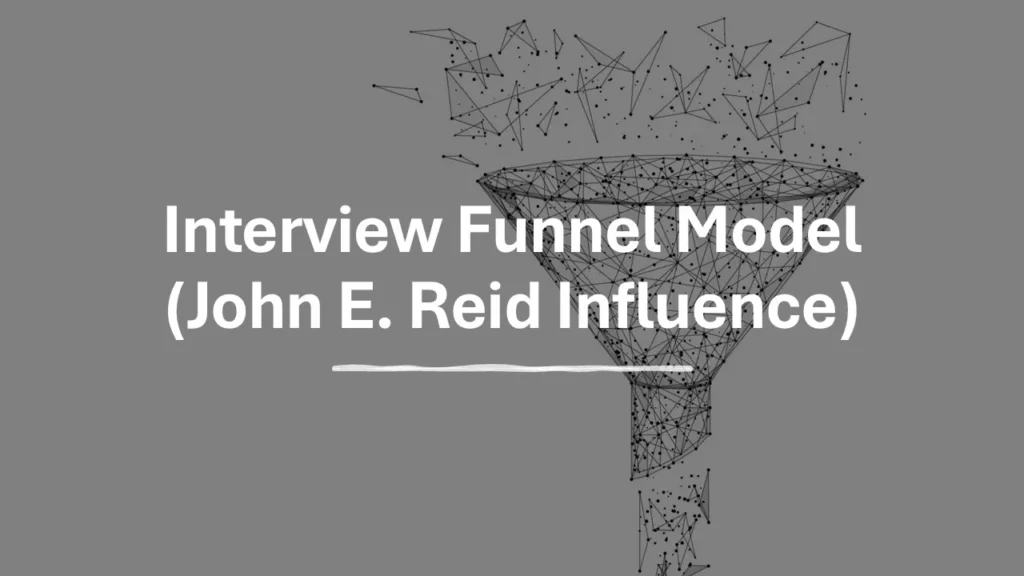
Interview Funnel Model (John E. Reid Influence)
The Interview Funnel Model, influenced by John E. Reid, structures questioning from broad, open-ended inquiries to focused, specific questions. It helps investigators gather accurate information, clarify details, and assess credibility, supporting effective interviews, statement analysis, and progressive disclosure techniques in both cooperative and resistant subject interactions.

Arrest & Detention Decision Model (Criminal Procedure Practice)
The Arrest & Detention Decision Model, grounded in Criminal Procedure practice, guides investigators in determining when to lawfully arrest or detain individuals. It considers legal thresholds, evidence sufficiency, risk factors, and procedural safeguards, ensuring decisions are justified, proportionate, and compliant with due process and investigative requirements.
Use of Force Continuum Model (Law Enforcement Standards)
The Use of Force Continuum Model guides law enforcement officers in applying proportionate, lawful, and accountable force. It supports decision-making, officer safety, public protection, de-escalation, documentation, and ethical policing by matching response levels to threat, resistance, and situational risk.
Entrapment Avoidance Model (Legal Doctrine Influence)
The Entrapment Avoidance Model, influenced by Criminal Law doctrine, ensures investigators do not induce individuals to commit offences they would not otherwise commit. It guides lawful conduct in undercover operations, preserving evidence integrity, protecting suspects’ rights, and ensuring investigations withstand legal scrutiny and judicial review.
Undercover Operations Model (Law Enforcement Practice)
The Undercover Operations Model, based on Law Enforcement practice, involves covert infiltration to gather evidence and intelligence. It focuses on identity creation, role immersion, and controlled engagement with suspects, enabling investigators to uncover hidden activities, disrupt criminal networks, and support prosecutions while maintaining operational security and legal compliance.
Surveillance Detection Route Model (CIA – Intelligence Tradecraft)
The Surveillance Detection Route Model, derived from Central Intelligence Agency tradecraft, focuses on identifying and evading surveillance through planned movement patterns. It enables investigators and operatives to detect hostile monitoring, confirm surveillance presence, and enhance operational security, supporting covert operations, counter-surveillance, and sensitive investigative missions.

SIGINT Analysis Model (National Security Agency Influence)
The SIGINT Analysis Model, influenced by the National Security Agency, focuses on collecting and analysing electronic communications and signal data. It supports investigators in intercepting, decoding, and interpreting transmissions, enabling intelligence gathering, threat detection, and strategic decision-making in cyber, military, and national security investigations.

HUMINT Collection Model (U.S. Intelligence Community)
The HUMINT Collection Model, developed within the United States Intelligence Community, focuses on gathering intelligence through human sources. It involves recruitment, handling, and debriefing of informants to obtain valuable information, supporting investigations, threat assessments, and operational decision-making in security, law enforcement, and intelligence environments.

CRW024 – Investigative Behavioural Analysis
Develop behavioural analysis skills focused on lie detection during investigative interviews. Participants learn to identify deception indicators, analyse verbal and non-verbal inconsistencies, and interpret behavioural cues to evaluate credibility and detect falsehoods during questioning and investigative interactions.

CRW023 – How To Spot Liars
This course explores practical techniques to detect deception through behavioural cues, speech patterns, emotional inconsistencies, and psychological indicators. Participants learn how to identify lies, uncover hidden intentions, and interpret subtle signals during interviews, negotiations, and everyday interactions.