


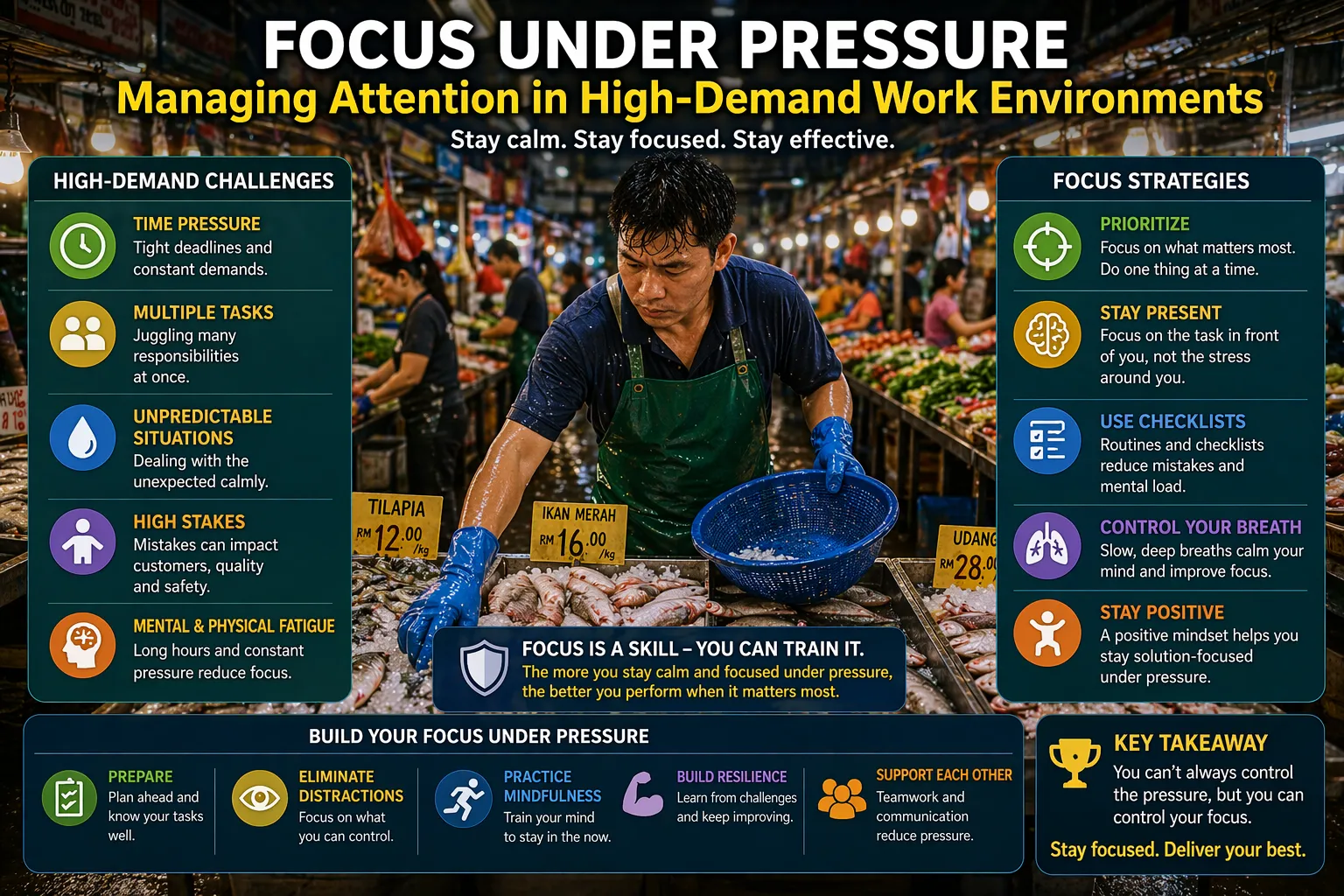
Building Attention Control at Work
Managing Attention in High-Demand Work Environments is essential for employees who need to stay focused, accurate, and productive under pressure. In many workplaces, people face constant emails, meetings, deadlines, interruptions, urgent tasks, and information overload. Therefore, they need practical skills to control attention and manage mental energy. Attention management helps individuals focus on important tasks, reduce errors, and complete work more effectively. As a result, employees can remain calm, organised, and confident even during demanding work situations.
Understanding Attention Challenges
High-demand environments often create competing demands. For example, employees may need to respond quickly while still making careful decisions. They may also need to switch between tasks, manage distractions, and handle unexpected changes. However, frequent interruptions can reduce concentration and increase stress. Therefore, learners need to understand how attention works and why focus can break down. In addition, they must recognise personal habits that affect productivity, such as multitasking, poor planning, and delayed follow-up.
Reducing Distractions and Mental Overload
Strong attention management requires clear priorities and practical routines. Employees need to organise tasks, set boundaries, manage digital distractions, and plan focused work periods. Moreover, they must learn when to pause, reset, and refocus. Guidance from Harvard Business Review highlights the importance of productivity, focus, and managing workplace demands. Therefore, learners can use simple attention strategies to improve work quality and reduce unnecessary pressure.
Improving Decision-Making Under Pressure
Attention also affects decision quality. When people feel overloaded, they may miss details, react too quickly, or make avoidable mistakes. Therefore, employees need methods to slow down, assess information, and focus on what matters most. The American Psychological Association provides useful insights on stress, attention, and psychological well-being. These ideas show why attention control is important for performance, safety, and emotional balance.
Supporting Sustainable Performance
Managing attention is not only about working harder. Instead, it is about working with clarity, structure, and self-awareness. Employees who manage attention well can prioritise better, communicate more clearly, and complete work with fewer mistakes. In addition, they can protect their mental energy and reduce burnout risk. Consequently, organisations benefit from better productivity, stronger reliability, and healthier workplace performance.
Course Focus and Learning Value
This course helps learners strengthen focus, attention control, prioritisation, distraction management, mental energy, and work planning. Learners will explore practical ways to manage interruptions, reduce overload, improve concentration, and make better decisions under pressure. Moreover, they will learn how attention management supports accuracy, confidence, productivity, and long-term workplace effectiveness. Ultimately, this course prepares learners to stay focused, organised, and effective in high-demand work environments.

Reviews
There are no reviews yet.